When we look back over the history of Knaphill we find that the ‘Brookwood Hospital’ played a vital part in the development of the village. In the 1850’s local settlement was at the bottom of Anchor Hill, near the thriving nurseries, but the building of the ‘Brookwood Lunatic Asylum’ (completed in 1867) brought major changes.
The initial hospital population was 650 patients: 321 males and 329 females. It was built in 150 acres of land in an isolated part of the country as the trend at that time was to house those deemed to be ‘lunatics’ at a distance from ‘normal’ people. Over the next hundred and twenty years it was a major employer, recruiting doctors, nurses, ancillary staff, maintenance and support workers and the life of Knaphill flourished around it.
From the early days the hospital expanded and by 1903 the patient population had risen to 1,265. In 1919 the title ‘asylum’ was dropped and replaced by ‘Mental Hospital’. With so many patients and staff to care for them, Knaphill grew. The brick works were busy and so were the builders and developers. We can still see the many different styles of houses that were constructed for the growing population of the village. Shops of all kinds, public houses and churches thrived too, catering to the earthly and spiritual needs of the bustling community. At the time of The National Health Act in 1946, the hospital was the home for 1,900 patients.
For our Memory Lane articles in the Knaphill News we have spoken to many local people who still remember the hospital in its hay-day; and they have clear personal recollections of this aspect of our local history. Many local people worked at the hospital and have vivid memories of the years when it was a major local employer and played a key role in the treatment of mental health in South Eastern England.
Marion Healy started her nursing career here in 1948 and stayed until 1990. Marion told KRA about her memories of the Hospital and changing attitudes to ‘Mental Health Care’ during the years that she worked there. Marion remembered Brookwood’s high standards of care and training, but also the locked wards, many geriatric patients and the T.B. Unit. As a Nursing Sister she saw how the gradual advances in medicine helped to bring patients’ symptoms under control by drugs. Change continued so that in 1974 the NHS was being reorganized again and it was decided to close all large mental hospitals and from 1986 a programme was underway for the closure of the Brookwood Hospital in 1994.
Marion’s recollections were of the tolerance of local people; of nurses from all over the world coming there to train there; of the range of social events that entertained patients, staff and locals and that made it a very happy place to live and work. For so many Knaphill residents the hospital was the source of employment. It attracting people from all over the county and many of them settled down and got married, had families and those families continue to live locally.
June Harding was born in Knaphill. Her parents met when working at the hospital and later married. “My father came here in the 1920’s and worked mainly in the high security unit. My mother left home in Wales aged seventeen to come to work there because her father was so strict.”
“The farm had cows, sheep, and shire horses and where the Vyne Car Park is now was the piggery. The hospital driveways were lined with beautiful rhododendron bushes, kept in immaculate condition, largely by patients working under supervision.” June recalled Christmas parties, annual coach outings to the seaside and Saturday Dances. “That was the highlight of my week as a teenager! And the highlight of the year for everyone was the August Bank Holiday Fete on the main playing field. There were marquees exhibiting flowers, fruit and vegetables, handicrafts; side-shows, swinging boats and stalls. It was a wonderful event for everyone attracting people from miles around.”
Willi Jost came to work there in 1956 as a ‘drain man’, keeping the sewage etc clear. Over the years he was promoted and eventually came to be in charge of the staff restaurant. (Yes, an interesting career path!) Willi remembered Brookwood as a good place to work. Staff lived in the ‘hospital cottages’ on Oak Tree Road, Sparvell Road, The Spur; everyone lived locally and worked locally, people were good neighbours, all helping one another.
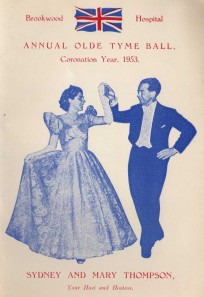 In the hospital there were workshops for boot-making, printing and all manner of repairs. Brookwood even had its own Fire Station and Willi worked as a Volunteer Fireman for extra income. The good social life was important to Willi too: the cinema shows, weekly dances (old time and modern), and Willi mentioned that quite a lot of ‘courting’ was done on those famous dance nights!
Since the hospital closed in 1994 the area has changed dramatically. The clock tower and the central building around it were converted into expensive apartments and named Florence Court (acknowledging the ‘Florence Wards’ originally named after Florence Nightingale); but most of the buildings were demolished, trees and flower beds etc removed. New houses were built, creating Redding Way, Percheron Drive, Barton Close, Florence Way, Tringham etc, again being given names that had links with the ‘Brookwood Hospital’. These are reminders that, for so much of its history, the life Knaphill was interwoven with the life of ‘the Hospital’.
 myKnaphill