Tag Archives: Woking

Town Centre development – decision

Last night, 4th November, the Councillors on Woking Borough’s Planning Committee approved the development plans for the area around the bandstand, fire station part of town. As stated in an earlier posting this development will have a significant impact on our bus services. One or two Councillors raised the question of bus routes but their main concern was the impact buses stopping on Victoria Way would have on the flow of traffic. The decision was if the bus stops on Victoria Way did not work just remove them. This would mean that for residents entering town there would be only one bus stop and that would be at the railway station.

Although Councillor’s discussed the plans for over an hour it soon became apparent that the plans would be approved and that the majority of the debate/argument had been held in private. The formal Planning Committee meeting was just a formality.

I am sure that in other debates Councillors will advocating that residents should leave their cars at home and either cycle, walk or take the us into town. When that day comes remind them of their attitude towards bus users in the design of the town centre.

Staying with transport it was assumed that the majority of residents in the 392 new apartments that form part of the plan will be commuters and a Councillor asked if this would have an impact on Woking’s railway stations ability to cope. The answer was yes but not our problem. Typical.

Woking Crime Summit 2014

Something that should be of interest to residents – an event with senior police members to explain their roles and listen to what matters most to you. This is YOUR chance to influence policing in the area.

WHEN: 18.30-21:30, Wednesday 26th March
WHERE: HG Wells Centre, Woking

From the Office of the Police and Crime Commissioner for Surrey –

Woking residents are invited to the Borough’s first Crime Summit. This event will see senior figures from Surrey Police, Surrey County Council, Woking Borough Council join Kevin Hurley, the Police and Crime Commissioner for Surrey, to talk about their work and hear from local people about the issues that matter to them in their communities.

The event is an opportunity for residents in Woking to hear about community safety work in the area; raise the issues that are affecting their lives and discuss with all of the public agencies working in the area how we can work together to solve those problems.
Refreshments will be provided from 18:00.

You can register:
Online: http://wokingsummit.eventbrite.co.uk/

Contact:
Telephone: 01483 630 200
Email: SurreyPCC@Surrey.police.uk
Post: Office of the Police and Crime Commissioner for Surrey, PO Box 412, Guildford, Surrey GU3 1BR


A bit of burglary prevention advice

Prompted by news of burglaries not just locally but of friends or acquaintances, I thought a few tips might be useful to property owners. There’s a link to some very good advice from a local locksmith and a couple of videos (yes one if from the U.S. but the information is relevant and doesn’t have quite such annoying music!)

Quick Google search for a local locksmith: CLICK HERE


Practical advice & tips:

Surrey Police: Home & Garden Security

The Lock Whisperer: Security advice


Videos:


Community Infrastructure Levy modifications

From Woking Borough Council –

Dear Sir/Madam

CIL Draft Charging Schedule Proposed Modifications and Submission

You will recall that the Council published its Community Infrastructure Levy – Draft Charging Schedule for consultation between 22 July and 30 August 2013.  Representations that were received have been taken into account and the Council is proposing modifications to the Draft Charging Schedule.  This will be submitted to the Planning Inspectorate for Examination.  A copy of the proposed Statement of Modifications is attached for your information.  It can also be accessed via the following link: http://www.woking2027.info/infrastructure/cilproposedchanges

The Council is intending to submit the Draft Charging Schedule and its supporting evidence by early 2014.  If you wish to appear at the Examination as a result of the proposed modifications, a request must be submitted to the Council by Friday 17 January 2014.  Requests to be heard at the Examination should be submitted to:  The Planning Policy Team, Woking Borough Council, Civic Offices, Gloucester Square, Woking, GU21 6YL or by e-mail: planning.policy@woking.gov.uk.

A copy of the Draft Charging Schedule and the supporting evidence are on the Council’s website (www.woking.gov.uk).  If you have any queries about the Draft Charging Schedule, please contact the Planning Policy Team on 01483 743871.

Affordable Housing Interim Guidance

The Council is also preparing an Affordable Housing Delivery supplementary planning document (SPD).  This will provide detailed information regarding the implementation and delivery of Policy CS12 Affordable Housing of the Core Strategy.  Public consultation will take place on the draft SPD next year; we will notify you when this consultation begins.

The Council has recently adopted informal guidance to assist developers in the interim period, until the Affordable Housing Delivery SPD is adopted.  The interim guidance explains how the Council calculates affordable housing developer financial contributions.  It also clarifies when affordable housing planning policy applies, the planning process, how the Council considers viability issues, how it defines previously developed land and greenfield land when considering development proposed on garden land, and provides details of Registered Providers for affordable housing and other useful contacts.  You can access the guidance via this link: http://www.woking2027.info/supplementary/wwwwoking2027infoaffordablehousingdeliveryspd

For further information, please contact the Planning Policy Team on 01483 743871 or email planning.policy@woking.gov.uk

Yours sincerely,

Ernest Amoako

Planning Policy Manager

Residents in Guildford and Woking warned about bank related fraudster scams

Surrey Police is warning residents, particularly in Guildford and Woking, to remain vigilant following a recent spate of scams involving fraudsters obtaining bank details, cards and cash using bogus telephone calls and couriers.
In the last 24 hours police have received reports of ten similar attempts to access bank cards and money, with reported offences in Guildford, Woking, Pyrford, Burpham and Chobham.
In each case the victims have reported receiving telephone calls from someone claiming to be a police officer and attempting to convince them to hand over large amounts of cash and bank cards.
The offenders often claim to be an officer from the Metropolitan Police and use a variety of pretences that include saying the victim’s bank card has been used by somebody that they have in custody. They then ask the victim to phone the bank to cancel the card and tell the victims that they will send a courier round to collect the card.
Meanwhile the fraudster stays on the line and obtains the victim’s bank details whilst they think they are phoning the bank. The courier then calls at the victim’s address saying they have been sent by the police to collect a parcel – the envelope containing the card.
Three incidents of this scam were all reported shortly after 9pm tonight (Saturday, 5 October) one took place at an address off the B367 Upshot Lane in Woking, another at address in Frog Grove Lane in Wood Street Village and a third offence in Burnet Avenue in Burpham.
Fortunately in the three most recent cases no money or cards were taken from the victims who were suspicious of the call and contacted Surrey Police.
Police are also appealing for details of a man who attended an address off Boltons Lane in Pyrford at around 5.30pm today claiming to be a courier who had been sent to collect a parcel containing bank cards from an elderly victim. Fortunately the victim refused to hand over his cards and the man left empty-handed.
The man is described as white, around 40-years-old, 5ft 8ins or 5ft 9ins tall, spoke with an eastern European accent, stocky build, short dark hair and was wearing a dark jacket and dark trousers.
Neighbourhood officers are warning residents that these requests are not genuine and that no police officer or bank would operate in this manner and would never request a customer to confirm their PIN details over the phone. Anyone who receives a suspicious call, either on the phone or in person, is urged to not give any details to the caller and report the matter to the police.
Any courier companies or taxis that may have been asked to pick up such packages are also being urged to call Surrey Police on 101 or call Crimestoppers anonymously on 0800 555 111.

Should Knaphill develop a Neighbourhood Plan?

Residents in Knaphill are feeling pretty abused when it comes to planning decisions. We’ve all felt Woking Borough Council’s approach is skewed at times, never seeming to reflect popular opinion or taking cognisance of what the locals are saying. So is it time to gain a larger influence over our village development by creating a Neighbourhood Plan?

What is a Neighbourhood Plan?

It’s a method of a local area to have more control over the ‘what and how’ is developed. It must be established and developed by a local town or parish council or a neighbourhood forum and must not contravene certain regulations or the Local Plan / strategy already created [by in this case Woking Borough Council]. For example, the community can have more of a say in choosing where you want new homes, shops and offices to be built; have your say on what new buildings should look like and help grant planning permission for the new buildings you want to see go ahead.

Who’s doing it?

Locally, Chobham (Surrey Heath) have submitted plans for their own Neighbourhood Plan and if you do a simple online search for ‘Neighbourhood Plan‘ then you get a whole raft of plans in various stages of development. This shows that communities throughout the country are taking this opportunity very seriously and having their say in the control of the area they live in.

Is it supported by regulations?

Absolutely. It was given the rubber stamp in the 2011 Localism Act and now has its own regulations – The Neighbourhood Planning (General) Regulations 2012 – so this is a serious commitment from the government to give power to the community, something local councils are fairly bad at doing.

I want more information

Well there’s a raft of it out there! This is supported by government and local councils so expect a few hoops to jump through. These are a bureaucratic necessity and add to what is not the easy option for any community group considering the idea of a Neighbourhood Plan. I’ve provided some links below that I think are useful. There’s a couple of guides for both ward councillors and general information; I’ve also included WBC’s own page on neighbourhood planning as well as an independent information site complete with a forum area to discuss the issues at hand.

Make no mistake this would be a tough road ahead but the rewards can be great – imagine not having to go through the pains of Brookwood Farm again where all opinion is washed aside, of having plans submitted where you can actually have an proper say in the process!

Links

How is it funded?

The local community will have to pay for the preparation of their neighbourhood plan. However, the Government has awarded funding to four organisations with expertise in planning, to assist communities in developing Neighbourhood Plans. These organisations are:
The Prince’s Foundation – assistance with community engagement and finding local solutions to issues. www.princes-foundation.org
Locality – provision of support and networking to community groups through online resources and other networking tools, practical workshops and seminars, and tailored advice through a telephone advice line. www.locality.org.uk
The Royal Town Planning Institute – via the Planning Aid service, the provision of free, independent, impartial, professional planning advice to people who do not have the means to pay professional fees. Provision of support and training to local communities to influence and contribute to planning strategy, policy and decision-making at all levels.
www.rtpi.org.uk/planningaid
The National Association of Local Councils in partnership with the Campaign to Protect Rural England – provision of basic information about the planning system via a website, phone line and publications. Establishing a programme of local events to inform the public and parish councils about how to influence local plans.
www.cpre.org.uk

Big question time – Who would do it for Knaphill?

Well there’s the rub. This will take a group of like minded people to come together and represent the interests of the whole village diligently and with constant engagement and communication and don;t forget there would have to be a referendum for Knaphill to adopt this approach.

Personally I do not see the Knaphill Residents Association (KRA) as being the body to accomplish the job although there should certainly be representation made. So who else would like to do the job?

Here’s the question for you – are you interested?


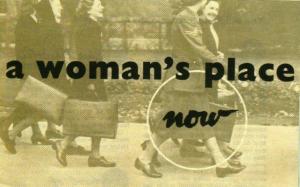
Knaphill History, Memory Lane – WOMEN at WAR

The history of Knaphill owes a great deal to the people who live here; to long established residents and some more recent arrivals.  KRA’s Memory Lane articles are based on the stories of real people who have made their home in Knaphill. When we were preparing the article ‘The Men and the Boys’, some of the wives overheard our conversations and they asked us to remember that wartime is not just about the exploits of the men! So we went back to record some of their wartime experiences; recollections of rationing, joining the Women’s Forces or doing ‘war work’, because the upheavals of 1939 – 45 were important for women too.
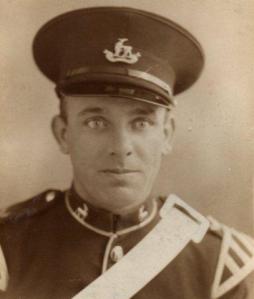
Josie Plant was born in Knaphill in 1937. “My dad, Joseph Plant, was a soldier, posted to Inkerman Barracks with The Royal Warwickshire Regiment. He met and fell in love with my Mum, Joan (Frost). Once War was declared he went off to fight, and was reported “missing” in 1940; I think we all thought we’d never see him again.  It was not until 1943 that Mum was notified he was being held as a prisoner of war by the Germans. On the day my Dad came home, my cousin Neil and I saw a chap coming down Anchor Hill, I didn’t know who he was; I didn’t know it was my Dad. Mum and the family put on a big party for him and made banners saying – ‘Welcome Home Joe’. He didn’t talk about it a lot, but we knew he’d had a terrible time at ‘Stalag XX1D’ prison camp.

I was only a kid, but I remember the ‘Doodle Bugs’ – bombs that would cut out and stop; some landed in Knaphill, the houses would shake. We often slept in the cupboard under the stairs (for ‘protection’ from the bombs) and later we had an ‘Anderson Shelter’ in the front room. It was like a big metal cage that you crawled under. In the first year after the war it was still there; we threw a cloth over it and used it like a table for my birthday party.”
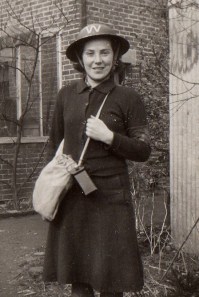
Grace Ludlow (nee Small) was born in 1918 and from the age of 5-12, by coincidence, lived in the very same house Josie was born in years later. Grace’s father was a well know local nurseryman, renowned for his roses. “I used to cycle down to our Village Hall for dances. I met my Joe when he was serving in the ‘Royal Welsh Fusiliers’ stationed at Blackdown Barracks. My Dad was none too pleased that I was being ‘courted’ by a soldier but I knew he was the one for me. We got married in 1939 and Joe was one of the first to leave for war. He had a gift for languages so he was seconded to ‘Intelligence’ and he didn’t get much home leave all through the war.

He was injured before Dunkirk and brought home on a ‘hospital ship’. Once he recovered he was sent to the Far East, down the Burma Road and he was briefly a Japanese prisoner of war, but managed to escape. Talking about it now you can hardly believe what the soldiers went through.

While Joe was away I moved back to live with my parents in West End,  and I worked at the bakery in St Johns, and in the evenings I was out in my tin hat as an ARP (Air Raid Precautions) Volunteer. I had to make sure everyone’s windows were ‘Blacked out’; so the bombers wouldn’t see us.

The siren at Brookwood Hospital often warned of attacks. Once a fighter plan crashed on the Recreation Ground at West End Village and my middle brother Alf found a machine gun in the wreckage. He brought it home, and sat with it propped it up on the kitchen table until Dad shouted – Get that back where you got it from!”
Patricia Norman was twenty-two when war started and was living in Bath, Somerset then. Pat worked as a civilian at the Admiralty. She had to sign the Official Secrets’ Act.  But despite the coded messages, teleprinter and a secret ‘phone, Pat said it was often boring.

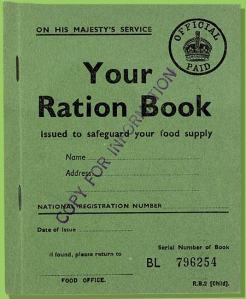
Bath’s historic buildings were bombed as part of Hitler’s “Spite Raids”, and a bomb dropped very close to Pat’s (less historic) home. She also remembered the long years of rationing. When a food parcel from Australia Pat and her mother were overjoyed to have dried egg powder, jelly crystals and tinned fruit; it was years before she could eat a fresh egg without feeling guilty!

Di Blair grew up in Mitcham. Aged fourteen, in 1938, she started full time work as a clerk at Conservative Central Office in Westminster. At that time Britain was not ready for war, so when Chamberlain (the Conservative Prime Minister) came back from Munich with ‘peace’ secured it was a great relief to the British public. Thousands sent him letters of gratitude and Di’s office had the job of acknowledging every one of them.War came, and for a while Di continued to work at Central Office. On one occasion Di actually spoke to Winston Churchill! She had to take an urgent message by hand and as Di approached he said “Is that for me my dear?”…..to which she calmly replied “Yes sir.”

Di saw a poster – ‘Join the WRNS’. She join-up in June 1942, aged just 18. Initially as a ‘Wren’ within the Fleet Air Arm, but later as an ‘Air Mechanic – Ordnance’ (AM-O). She was taught how to strip down and repair all manner of small arms and ground defence weapons– rifles, Bren guns, Machine Guns. Most of the time she was based near Portsmouth; so it will be no surprise that she met and later married a sailor; she married Danny Blair, who features in one of our ‘The Men & the Boys’ articles.
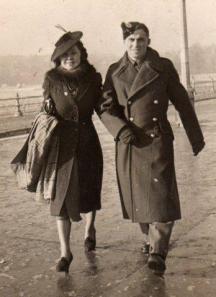
Life was not easy for the girls who were at home. Soon after war started Joan Clark went to work in an aircraft factory, making parts for ‘Spitfires’. The bombs, time spent in the air raid shelters, the hardships, they were all part of everyday life and shortages meant Joan, like everyone else, had to adapt and cope. When Joan got married in 1941, she chose blue cloth for her wedding dress; it had to be ‘practical’, not just for one day!

Like other forces wives the early years of her married life were mostly spent apart from her husband. John was posted to Africa in 1943, when Joan was heavily pregnant. She was able to write and send photos, but it was nearly three years before he got home to see her again and to see their son for the first time. But as Joan said…..”at least I was one of the fortunate ones, my husband returned safely”.
……………………………………………………………………………………………………………………………………..
Thank you to everyone who has shared their memories with us for these articles.