Tag Archives: Knaphill

Memory Lane – Jubilee

June Harding vividly recalled the disruption to her class at Knaphill School on the afternoon of 6th February 1952 when classmate, Arthur Martin, stood up and excitedly announced, “Please Miss. Please Miss. The King is dead.” Their teacher Miss Nancarrow was shocked, and reprimanded him, “Boy, don’t stand there and tell lies!” but Arthur insisted it was the truth, he had been home for lunch and heard the news on the radio. The School Office confirmed it; yes George VI was dead.

There was a lengthy period of official mourning, but spirits gradually lifted as Princess Elizabeth took up her role as the new monarch and plans were made for her Coronation in the summer of 1953. As a young college student Bob Boorman recalled going with friends on a grand tour on London buses to see the decorations that had been put up all over the city. Having been brought up in the ‘black out’ and austerity of the war years Bob had never seen anything like it. The evening sky glowed: the ‘Coronation Arches’ of flags, trimmings and lights; the beautiful floodlit public buildings; The Festival Hall and the lights along the Thames.

Coronation Day, June 2nd was a Public Holiday and people were pleased to have the opportunity to celebrate. Most households didn’t have a television in those days, so families like Ruth Collyer’s on Victoria Road, invited friends and neighbours in to watch the programme with them. Di Blair also remembered a house packed with people, squeezed in to their living room, to watch the grainy black and white image on the 9 inch screen. It is hard for modern viewers, with so many channels and choices, to realise how special the TV and radio broadcasts were on that day; the pomp and ceremony of the event was relayed to millions of people via the BBC programmes, and most people across the country watched or listened.

As well as London, most towns and villages made a real effort to decorate their neighbourhood. Bob came home to be part of Knaphill’s Coronation celebrations. A procession had been arranged through the village and he was persuaded to join the ‘recorder band’. There was a big party on the ‘top’ recreation ground, with various sports events, floats and fun. There were many local street parties too. Di and Ruth both remembered neighbours shared in the preparations: made decorations, begged and borrowed trestle tables, made sandwiches and cakes, orange squash, pots of tea and often someone wheeled out a piano or brought along an accordion so people made their own music and sang.

When the children went back to school there was a Commemorative Mug for every child. The Radio Times and most newspapers had special editions with photographs, and British Pathé produced a film of the Coronation that many schools and families went to watch it at the cinema. Do you have memories or memorabilia from the Coronation? How our lives have changed since then. We have lots of improvements and good things to enjoy now, but somehow memories linger on, reminding those who were growing up in the 1950’s of a simpler time………

Thanks to all those who shared their memories and photographs with KRA and helped in the preparation of this article.
Special thanks to Ruth Collyer, Bob Boorman, Di Blair, Mrs Kathleen Boorman, June Harding, Sylvia and Derek Cloak.

Sainsbury’s win planning appeal

Some background information

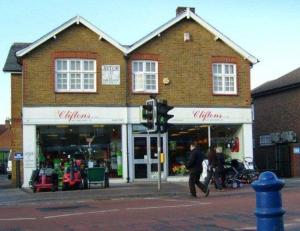
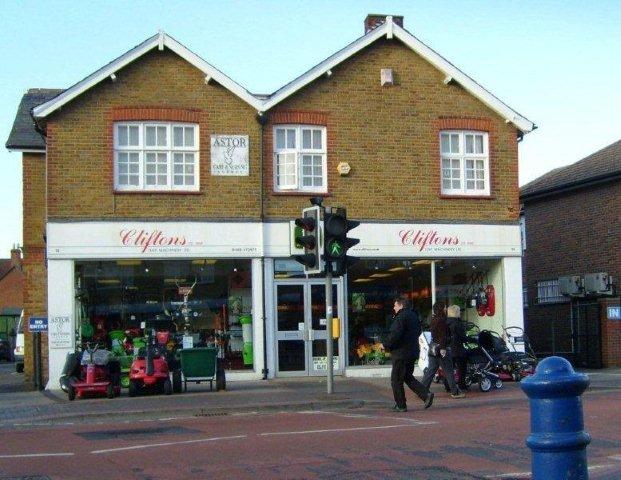
In2010 Cliftons submitted a planning application to redevelop the site of their old shop at 15 High Street, Knaphill and the bungalow at 6 Fosters Lane. The application was to replace the current shop and workshops with a three storey building containing 12 flats on 1st and 2ND floors and a large shop on the ground floor. This application was agreed with a number of conditions one of which was to limit the hours the shop could be open to customers, under the original planning decision the shop could open from 08.00am until 8.00pm and Sunday trading hours. It was at this points that Sainsbury’s publically stated that they were to take on the lease of the shop but wanted to open from 07.00am until 10.00pm Monday to Saturday inclusive. This request for extended opening hours was recommend to be accepted by Woking’s Planning Authority. The Planning Committee were concerned with the traffic and the impact on residents who live in the centre of Knaphill and agreed to Sainsbury’s being allowed to have the extended opening hours for a trial period of 12 months. Sainsbury’s rejected the offer of a trial and went to appeal.

Planning Officers Decision

The Planning Inspector has found in favour of Sainsbury’s, sorry I should report in favour of Commercial Development Projects Ltd, Sainsbury’s did not want the publicity. The Inspector has given permission for the new shop to be open to customers from 07.00am to 10.00pm (07.00-22.00) Mondays to Saturdays and 08.00am to 09.00pm (08.00 – 21.00). In reaching this decision the Inspector refers to the opening hours of the Co-op and the petrol station. The Inspector also points out that the appeal was only to examine the question of the shops opening hours as the Council had already approved the design and build of the new development. On the request for the extension the Inspector also points out in the report that the Planning Authority fully supported the request for extended opening hours.

Road Safety

One other change is in connection with car parking at the rear of the new store. The majority of parking bays are for the residents of the flats but on the original application 5 parking bays were for staff and customers. The Highways Authority initially stated that they had no objections to the plan and it was passed as originally outlined, 5 parking bays for staff and customers. The Highways Authority then changed their position and by the time the application for extended hours came before the Planning Committee the Highways Authority stated that it would be unsafe for the car park to be open to customers, on grounds of the amount of vehicles entering and leaving the car park. The decision of the Planning Inspector is to revert to the original plan and therefore the 5 parking bays reserved for staff will also be available to customers. The Inspectors argument is that if customers cannot park behind the shop they will park in the High Street and that could result in congestion and highway safety problems.


So 5 parking bays for staff and customers, if say 3 members of staff drive to work that leaves only 2 customer parking bays, people will finish up parking on the road especially early morning and late at night. The passing of this plan will give rise to highway safety issues.

Impact on the village

The basic question is; does Knaphill require two Sainsbury’s stores within 800 metres of each other? This new store will have a detrimental effect on the current choice of shopping in the village; more premises will probably become available for more take-aways. The next question is what will happen to the HSBC bank when the Knaphill branch closes next month, one thing we can be sure of whoever puts in a planning application Woking Borough Council will not take into considerations the views of local resident’s.

Sainsbury’s of Redding Way play the planning game

At the end of November beginning of December all the efforts of the KRA committee members and Ward Councillors were directed to trying to get strong conditions imposed on Sainsbury’s as they pushed forward with the their plans for an extension to their store in Redding Way. Representatives for Sainsbury’s were making all the right noises about wanting to build good relations with the residents who live close to the store.
 

In the meantime the store management erected a large marquee in the service yard. This came to our attention because local residents were again disturbed at night due to the increased activity in the service yard. Residents complained to WBC hoping and believing that an enforcement officer would instruct Sainsbury’s to remove the marquee as it breached the conditions under which the store received their initial planning permission.


The marquee remained and Sainsbury’s had the audacity to apply for retrospective planning consent. Agents for Sainsbury’s wrote to WBC on 9 December with this request and according to the WBC web site it was logged on 13 December, the day when the Planning Committee resumed their consideration of the extension plans but the Planning Officer failed to notify the Committee of this request for retrospective consent.


We hope that the application for retrospective consent is put to the Planning Committee and that the Councillors ask the questions we would like answers too.


Why didn’t WBC have Sainsbury’s remove the marquee after residents complained about the disturbance?


If, like we believe, the marquee is in breach of the conditions for the operation of the store why was it allowed to stand for the whole of the Christmas period?


If what we have reported proves to be correct then the Council should impose sanctions on the store for their reckless behaviour.


Phillip Stubbs (Secretary)

Scout’s fireworks display!

UPDATE: Tell us what you thought of the event on Saturday – I certainly had a great time!
——————————-

1st Knaphill Scouts are pleased to invite you all to another fantastic fireworks display this year!

The incredibly popular event will be held on 5th November at the Vyne field in Redding Way with gates opening from 6pm.

Stalls this year include all the favourites for a winters evening in front of the fire – burgers, hot dogs and a funfair for the kids so get in early to take advantage and a front row place for the display.


Bonfire from 7pm

Fireworks 7.30pm

Admission Adults £3.50, children £2.50

Please note that children under 14 must be accompanied by an adult.

Sainsbury’s plans for the Clifton’s Site

UDPATE: APPROVED!

The planning committee debated last night and have agreed to a temporary variation of opening times as per Sainsbury’s request.

Sainsburys will be able to open from 07.00am to 10.00pm Monaday to Saturday and 08.00am to 8.00pm on Sundays for 18 months starting today, even though the store is yet to be built! The Council’s legal officer felt that this was the only way the agreement could be worded, whereas the committee itself wanted a trial for 12 months from the date the store opens.

During the next 18 months, the council has said it will gain evidence of noise and traffic concerns. What this will mean in practice is unknown as once the store is built and operating it would be exceptionally hard to close down.

A few points worth mentioning

  1. There were no Knaphill Councillors at the meeting [although Melanie Whitehand did submit a letter prior to the debate (link to letter)]
  2. No Councillor suggested rejecting the request from Sainbury’s
  3. The Council blame Surrey Highways for lack of assistance with the original request [caution: buck passing…]


14/10/11

The application is due to be debated on the 18th October according to Melanie Whitehand.

Please see Phil Stubbs’ comment below for the KRA’s observations and commentary, as sent to all local councillors and the planning committee.

You may also like to browse through the Knaphillian forum topic on the subject here

25/9/11

The planning officers have recommended the application for a change of trading and delivery hours to be APPROVED despite a mass of objections and commentary from Melanie Whitehand.

The application is on the agenda for the forthcoming planning committee meeting on the 27th September at 7pm in the council chambers. This meeting is open to the public and anyone who registered their objection should have received a letter offering the opportunity to speak at the meeting. Anyone wishing to speak should register their intent with the council prior to the meeting.


History

Early in February local people became aware of Sainsbury’s plans to lease the premises to be re-developed on the site of Clifton’s, 15 High Street, Knaphill: PLAN/2011/0062 (See KRA’s earlier article and comments). There seems to be a growing momentum of opposition to this Planning Application.

Last year The Clifton family submitted a Planning Application PLAN/2010/0085 (which received planning approval) to re-develop the Clifton’s site: For the Erection of a three storey building containing A1 (retail) use at ground floor and 7 x 1 bedroom and 5 x 2 bedroom flats at first and second floors following the demolition of the existing shop and workshops at 15 High Street and 6 Fosters Lane.

Also, on the 2010 Application, on the section for the retail premises there was ‘Condition 7’ that: “The premises hereby approved shall not be open to customers and have no deliveries between the hours of 8.00 pm and 8.00 am Monday to Saturday inclusive, comply with Sunday Trading Restrictions and have no deliveries on Sundays unless agreed in writing by the Local Planning Authority.”

This latest 2011 Appliction proposes changes to Condition 7. Before taking up the Lease, Sainsbury’s want: “The premises shall be open to customers between the hours of 7.00 am to 11.00 pm Mondays to Saturdays and 10.00 am to 4.00 pm on Sundays and Bank Holidays”.Residents can see the detail of both Applications on the Woking Borough Council (WBC) website http://caps.woking.gov.uk/online-applications/ then key in the relevant Planning Application Number (as listed above).

People from all sections of the community are registering their Comments on the WBC site in relation to the lastest Plan/2011/0062 and most of them seem to be expressing opposition. There seems to be growing concern and calls for a Public Meeting to discuss the impact this kind of development could have on the centre of the village.

The original Application was opposed by some residents, especially those who live close to Cliftons, but many people may not have been aware of the project and for whatever reasons did not get involved in the discussion at that time. This latest Application has raised wider questions and made more people aware of the issues…….Many people are saying this strikes at the heart of the viability of many of the small businesses in Knaphill, who are already fighting for survival because of the Big Sainsbury’s Store down the road, and of the life of the Village Centre.

Objection forms are circluating in the village and are available in many local shops. They raise concerns regarding:
* Increased Traffic within the village
* Parking Problems on the High Street adjacent to the new development & surrounding streets
* Increased anti-social behaviour
* Increased noise and light pollution
* Reduced competition, as there is already a Sainsbury’s within close distance to the village
* Damage to the sustainability of existing local shops

Whatever your views, please don’t just sit back and ignore this. Check the Planning Applications, think about the implications and register your comments. Since the Application was submitted over 300 comments have been added to the WBC site and most are strong statements of OBJECTION. (KRA is checking the Comments each day…..as at 26th Feb. over 300)
Have your say!!

Oktoberfest!

Oktoberfest is coming to Mizens Railway this October.


Make sure to visit this fantastic event to celebrate all things steam train and mechanical organ related!


Open from 12 noon to 5pm on Sunday 16th October; admission prices are Adults £2, children £1 and a family ticket £5 (2 adults and up to 3 children).


Village Show 2011 – Children’s Horticultural Show Pictures Update

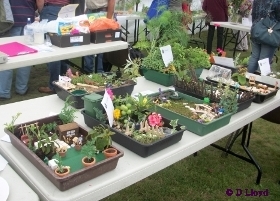
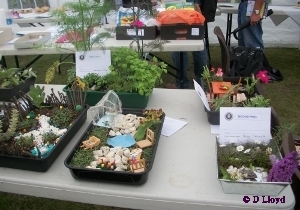
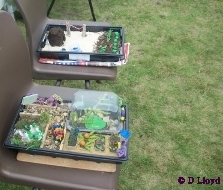
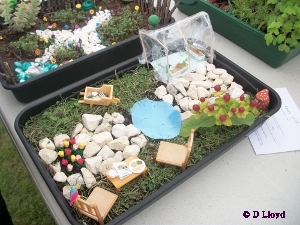
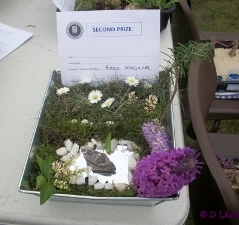
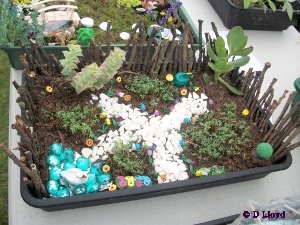
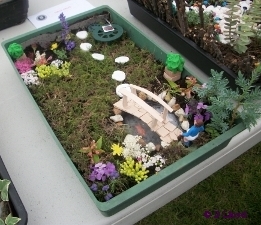
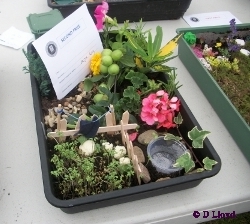
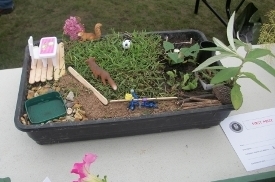
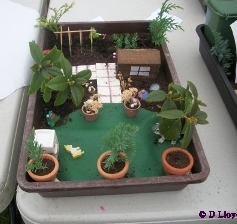
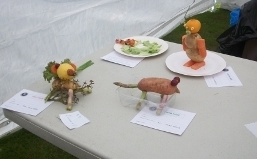
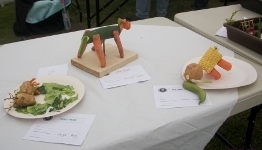
We had lots of super entries from local children for the Children’s Categories at the Horticultural Show: The Miniature Garden and the Object or Animal made from vegetables and/or fruit. Well done to all the youngsters who took part. The judges really had a difficult job to decide on the winners. Well done everyone.

Please note that these pictures are copyrighted low-res editions and if you want a copy in a better resolution or to use them elsewhere please contact the Website Editor for copies and permissions.

If you have more pictures of the show, please contact us to share.

Well done everyone.

We are looking forward to having a new competition next year and even more entries from local children.

We had a wonderful time!

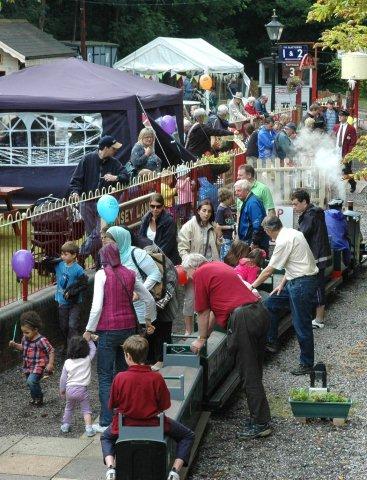
Volunteers from The Knaphill Residents’ Association (KRA), Mizens Railway and local community groups had been working for months to prepare for the Knaphill Village Show on 16th July, so we were not going to let the grey skies and a few drops of rain dampen our enthusiasm.

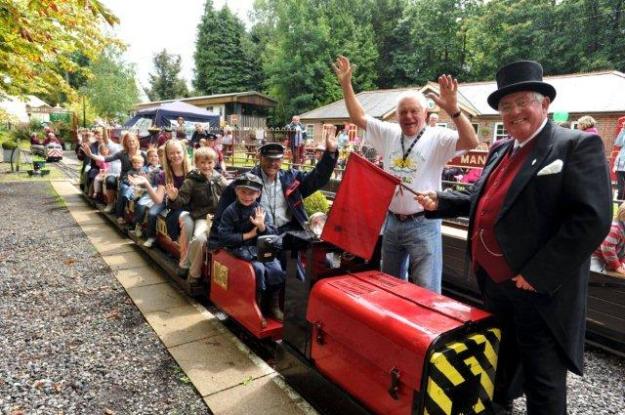
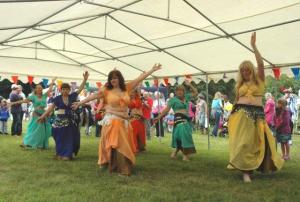
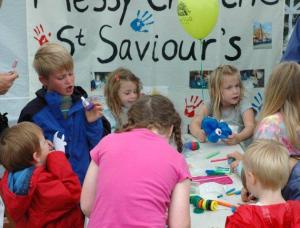
There were stalls and attractions from Knaphill community groups, churches, craftsmen and women and local businesses, plus marvellous Mizens train rides. There was Live Music from The Charlie Farley Sunday Four, a well stocked Beer Tent, BBQ and lots of food and refreshments to try. Popular new attractions this year included: Professor Dickie Richards Punch & Judy Shows, Bellytricks – Belly dancers, Alysia Welch’s Diddi Dance and Chobham St Lawrence Morris Dancers.  We had a wonderful day with over a thousand visitors to the Show.

The Knaphill Residents’ Association would like to thank everyone who helped to make the show such a success.  We are really grateful for the financial support of Andrew White at Seymours Knaphill as the main show sponsors, and the many other local businesses and individuals helped by donating Prizes for the Horticultural Show and for the Tombola.

Special thanks go to the volunteers, the clubs and stall holders who worked so hard to create a traditional event for everyone to enjoy. Thanks  also to the people of Knaphill who brought the sunshine with them to share for this fabulous community day.
Thank you everyone.

Photographs reproduced by kind permission of Surrey Advertiser (top photo.) and of Ron Dewar(other photos on this page).

Remember Mizens Railway is open on Sunday and Thursday afternoons during August.

See the Mizens website for details: www.mizensrailway.co.uk

Memory Lane – Knaphill History, The Brookwood Hospital

When we look back over the history of Knaphill we find that the ‘Brookwood Hospital’ played a vital part in the development of the village. In the 1850’s local settlement was at the bottom of Anchor Hill, near the thriving nurseries, but the building of the ‘Brookwood Lunatic Asylum’  (completed in 1867) brought major changes.

The initial hospital population was 650 patients: 321 males and 329 females. It was built in 150 acres of land in an isolated part of the country as the trend at that time was to house those deemed to be ‘lunatics’ at a distance from ‘normal’ people. Over the next hundred and twenty years it was a major employer, recruiting doctors, nurses, ancillary staff, maintenance and support workers and the life of Knaphill flourished around it.

From the early days the hospital expanded and by 1903 the patient population had risen to 1,265. In 1919 the title ‘asylum’ was dropped and replaced by ‘Mental Hospital’. With so many patients and staff to care for them, Knaphill grew. The brick works were busy and so were the builders and developers. We can still see the many different styles of houses that were constructed for the growing population of the village. Shops of all kinds, public houses and churches thrived too, catering to the earthly and spiritual needs of the bustling community. At the time of The National Health Act in 1946, the hospital was the home for 1,900 patients.

For our Memory Lane articles in the Knaphill News we have spoken to many local people who still remember the hospital in its hay-day; and they have clear personal recollections of this aspect of our local history. Many local people worked at the hospital and have vivid memories  of the years when it was a major local employer and played a key role in the treatment of mental health in South Eastern England.

Marion Healy started her nursing career here in 1948 and stayed until 1990. Marion told KRA about her memories of the Hospital and changing attitudes to ‘Mental Health Care’ during the years that she worked there. Marion remembered Brookwood’s high standards of care and training, but also the locked wards, many geriatric patients and the T.B. Unit. As a Nursing Sister she saw how the gradual advances in medicine helped to bring patients’ symptoms under control by drugs. Change continued so that in 1974 the NHS was being reorganized again and it was decided to close all large mental hospitals and from 1986 a programme was underway for the closure of the Brookwood Hospital in 1994.

Marion’s recollections were of the tolerance of local people; of nurses from all over the world coming there to train there; of the range of social events that entertained patients, staff and locals and that made it a very happy place to live and work. For so many Knaphill residents the hospital was the source of employment. It attracting people from all over the county and many of them settled down and got married, had families and those families continue to live locally.

June Harding was born in Knaphill. Her parents met when working at the hospital and later married. “My father came here in the 1920’s and worked mainly in the high security unit. My mother left home in Wales aged seventeen to come to work there because her father was so strict.”

“The farm had cows, sheep, and shire horses and where the Vyne Car Park is now was the piggery. The hospital driveways were lined with beautiful rhododendron bushes, kept in immaculate condition, largely by patients working under supervision.” June recalled Christmas parties, annual coach outings to the seaside and Saturday Dances. “That was the highlight of my week as a teenager! And the highlight of the year for everyone was the August Bank Holiday Fete on the   main playing field. There were marquees exhibiting flowers, fruit and vegetables, handicrafts; side-shows, swinging boats and stalls. It was a wonderful event for everyone attracting people from miles around.”

Willi Jost came to work there in 1956 as a ‘drain man’, keeping the sewage etc clear. Over the years he was promoted and eventually came to be in charge of the staff restaurant. (Yes, an interesting career path!) Willi remembered Brookwood as a good place to work. Staff lived in the ‘hospital cottages’ on Oak Tree Road, Sparvell Road, The Spur; everyone lived locally and worked locally, people were good neighbours, all helping one another.

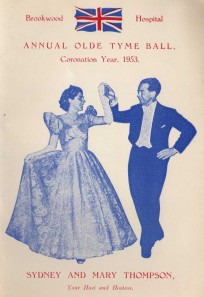
In the hospital there were workshops for boot-making, printing and all manner of repairs. Brookwood even had its own Fire Station and Willi worked as a Volunteer Fireman for extra income. The good social life was important to Willi too: the cinema shows, weekly dances (old time and modern), and Willi mentioned that quite a lot of ‘courting’ was done on those famous dance nights!

Since the hospital closed in 1994 the area has changed dramatically. The clock tower and the central building around it were converted into expensive apartments and named Florence Court (acknowledging the ‘Florence Wards’ originally named after Florence Nightingale); but most of the buildings were demolished, trees and flower beds etc removed. New houses were built, creating Redding Way, Percheron Drive, Barton Close, Florence Way, Tringham etc, again being given names that had links with the ‘Brookwood Hospital’. These are reminders that, for so much of its history, the life Knaphill was interwoven with the life of ‘the Hospital’.

Knaphill History, Memory Lane – WOMEN at WAR

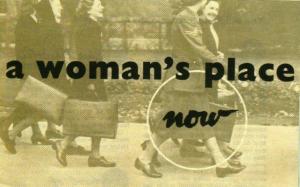
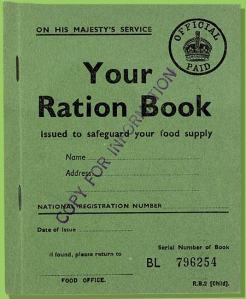
The history of Knaphill owes a great deal to the people who live here; to long established residents and some more recent arrivals.  KRA’s Memory Lane articles are based on the stories of real people who have made their home in Knaphill. When we were preparing the article ‘The Men and the Boys’, some of the wives overheard our conversations and they asked us to remember that wartime is not just about the exploits of the men! So we went back to record some of their wartime experiences; recollections of rationing, joining the Women’s Forces or doing ‘war work’, because the upheavals of 1939 – 45 were important for women too.

Josie Plant was born in Knaphill in 1937. “My dad, Joseph Plant, was a soldier, posted to Inkerman Barracks with The Royal Warwickshire Regiment. He met and fell in love with my Mum, Joan (Frost). Once War was declared he went off to fight, and was reported “missing” in 1940; I think we all thought we’d never see him again.  It was not until 1943 that Mum was notified he was being held as a prisoner of war by the Germans. On the day my Dad came home, my cousin Neil and I saw a chap coming down Anchor Hill, I didn’t know who he was; I didn’t know it was my Dad. Mum and the family put on a big party for him and made banners saying – ‘Welcome Home Joe’. He didn’t talk about it a lot, but we knew he’d had a terrible time at ‘Stalag XX1D’ prison camp.

I was only a kid, but I remember the ‘Doodle Bugs’ – bombs that would cut out and stop; some landed in Knaphill, the houses would shake. We often slept in the cupboard under the stairs (for ‘protection’ from the bombs) and later we had an ‘Anderson Shelter’ in the front room. It was like a big metal cage that you crawled under. In the first year after the war it was still there; we threw a cloth over it and used it like a table for my birthday party.”

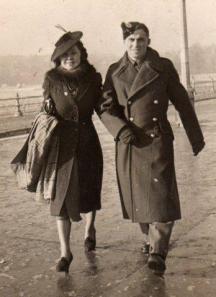
Grace Ludlow (nee Small) was born in 1918 and from the age of 5-12, by coincidence, lived in the very same house Josie was born in years later. Grace’s father was a well know local nurseryman, renowned for his roses. “I used to cycle down to our Village Hall for dances. I met my Joe when he was serving in the ‘Royal Welsh Fusiliers’ stationed at Blackdown Barracks. My Dad was none too pleased that I was being ‘courted’ by a soldier but I knew he was the one for me. We got married in 1939 and Joe was one of the first to leave for war. He had a gift for languages so he was seconded to ‘Intelligence’ and he didn’t get much home leave all through the war.

He was injured before Dunkirk and brought home on a ‘hospital ship’. Once he recovered he was sent to the Far East, down the Burma Road and he was briefly a Japanese prisoner of war, but managed to escape. Talking about it now you can hardly believe what the soldiers went through.

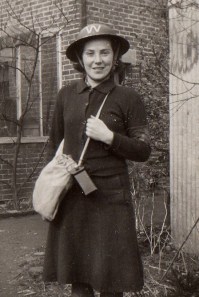
While Joe was away I moved back to live with my parents in West End,  and I worked at the bakery in St Johns, and in the evenings I was out in my tin hat as an ARP (Air Raid Precautions) Volunteer. I had to make sure everyone’s windows were ‘Blacked out’; so the bombers wouldn’t see us.

The siren at Brookwood Hospital often warned of attacks. Once a fighter plan crashed on the Recreation Ground at West End Village and my middle brother Alf found a machine gun in the wreckage. He brought it home, and sat with it propped it up on the kitchen table until Dad shouted – Get that back where you got it from!”

Patricia Norman was twenty-two when war started and was living in Bath, Somerset then. Pat worked as a civilian at the Admiralty. She had to sign the Official Secrets’ Act.  But despite the coded messages, teleprinter and a secret ‘phone, Pat said it was often boring.

Bath’s historic buildings were bombed as part of Hitler’s “Spite Raids”, and a bomb dropped very close to Pat’s (less historic) home. She also remembered the long years of rationing. When a food parcel from Australia Pat and her mother were overjoyed to have dried egg powder, jelly crystals and tinned fruit; it was years before she could eat a fresh egg without feeling guilty!

Di Blair grew up in Mitcham. Aged fourteen, in 1938, she started full time work as a clerk at Conservative Central Office in Westminster. At that time Britain was not ready for war, so when Chamberlain (the Conservative Prime Minister) came back from Munich with ‘peace’ secured it was a great relief to the British public. Thousands sent him letters of gratitude and Di’s office had the job of acknowledging every one of them.War came, and for a while Di continued to work at Central Office. On one occasion Di actually spoke to Winston Churchill! She had to take an urgent message by hand and as Di approached he said “Is that for me my dear?”…..to which she calmly replied “Yes sir.”

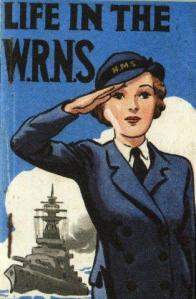
Di saw a poster – ‘Join the WRNS’. She join-up in June 1942, aged just 18. Initially as a ‘Wren’ within the Fleet Air Arm, but later as an ‘Air Mechanic – Ordnance’ (AM-O). She was taught how to strip down and repair all manner of small arms and ground defence weapons– rifles, Bren guns, Machine Guns. Most of the time she was based near Portsmouth; so it will be no surprise that she met and later married a sailor; she married Danny Blair, who features in one of our ‘The Men & the Boys’ articles.

Life was not easy for the girls who were at home. Soon after war started Joan Clark went to work in an aircraft factory, making parts for ‘Spitfires’. The bombs, time spent in the air raid shelters, the hardships, they were all part of everyday life and shortages meant Joan, like everyone else, had to adapt and cope. When Joan got married in 1941, she chose blue cloth for her wedding dress; it had to be ‘practical’, not just for one day!

Like other forces wives the early years of her married life were mostly spent apart from her husband. John was posted to Africa in 1943, when Joan was heavily pregnant. She was able to write and send photos, but it was nearly three years before he got home to see her again and to see their son for the first time. But as Joan said…..”at least I was one of the fortunate ones, my husband returned safely”.
……………………………………………………………………………………………………………………………………..
Thank you to everyone who has shared their memories with us for these articles.